Showing posts sorted by date for query flat earth. Sort by relevance Show all posts

Tuesday, September 27, 2022

P&H Volan 160 long term test and comparative review.


Introduction.


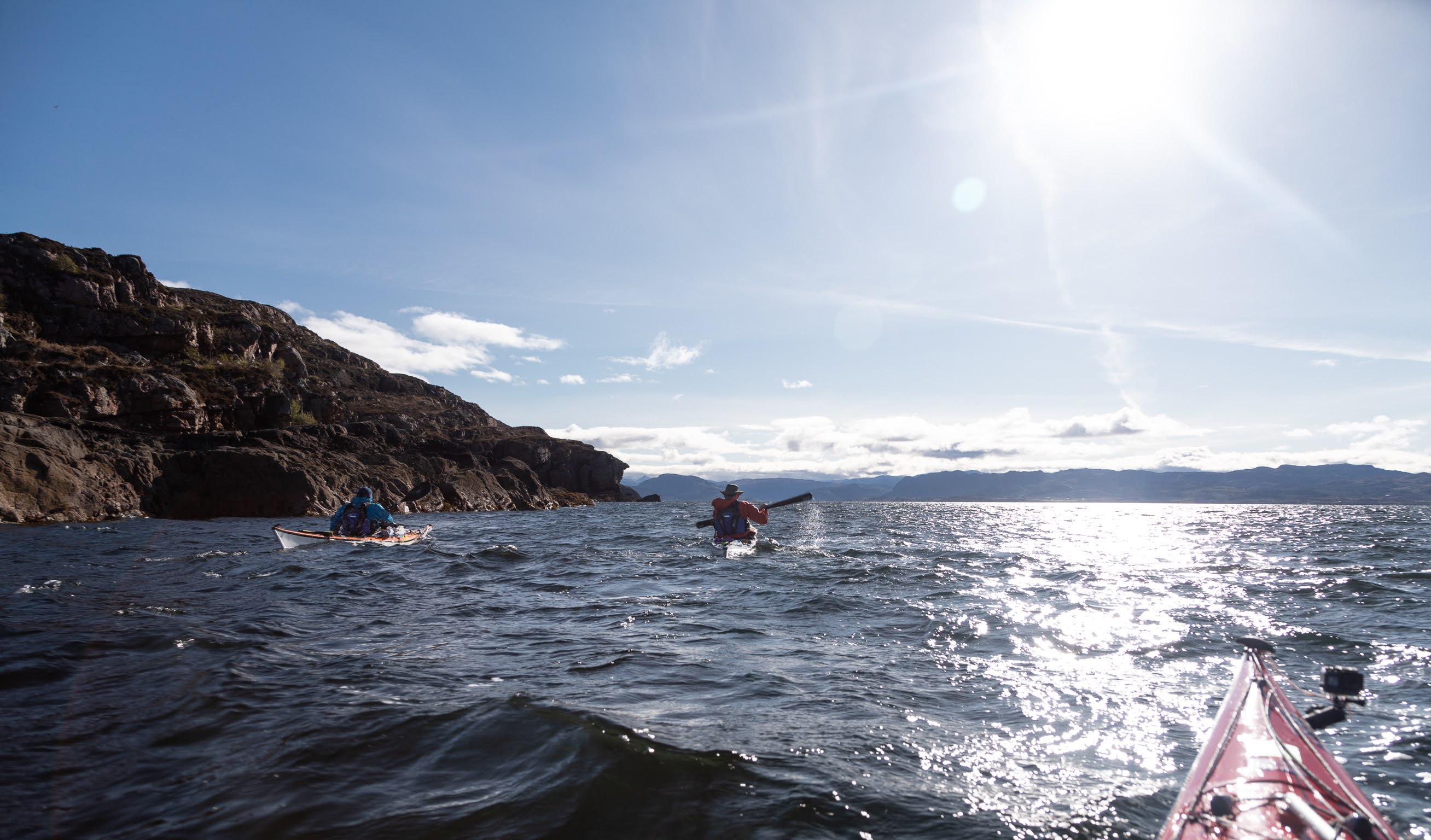
P&H Volan 160 in its element. Photo by Ian Johnston.

This really is a long term test. I first paddled the Volan MV back in October 2020 but a combination of injury, resulting in a fractured coccyx, chronic health problems and covid lockdown has limited my time to the extent that P&H have since renamed it the Volan 160! So with apologies to P&H, I have at last spent enough time in the Volan 160 to get enough experience for a meaningful test and comparative review. This is an updated and expanded version of a test which was published here then edited and published in Kanu Magazin in April 2022. It includes comments and posts I have made on P&H Owners Group Facebook page since then.
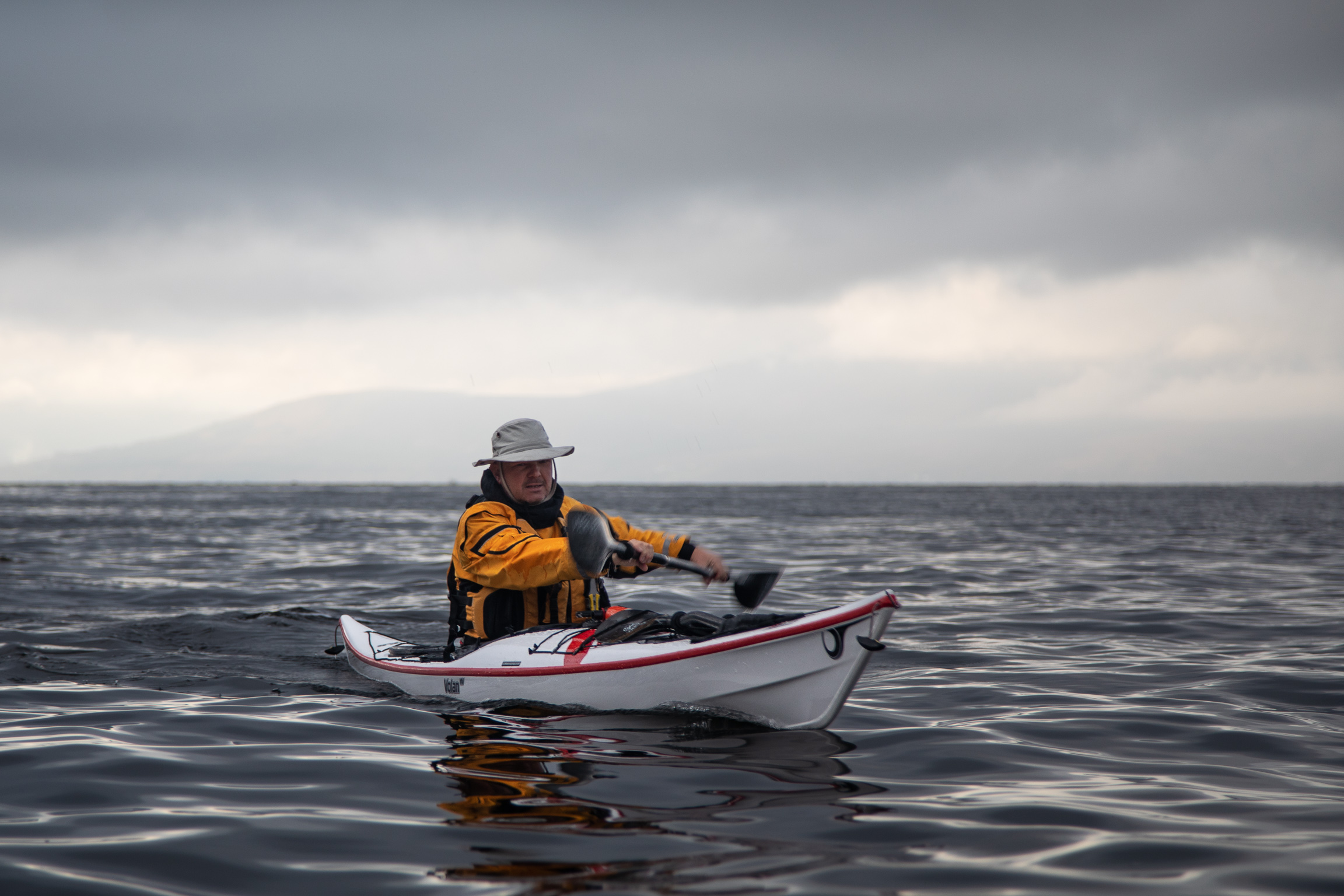

P&H have created the Volan 160 (16 foot) kayak because they saw a need for a shorter, lighter, more manoeuvrable kayak that was still capable of going weekend camping trips as well as being a lot of fun on day trips. I believe they have created something much more. The Volan 160 is a true all round, all purpose sea kayak, which is also capable of multi-day trips rather than just weekend trips.


Design features.

The Volan 160 has relatively steep bow and stern overhangs to maximise its waterline length. It has considerable bow and stern rocker and hard chines run nearly its full length. The sheer line (seam) rises steeply towards the the bow which reduces waves breaking over the bow, pitching and purling. In plan, the wide point on the Volan is about the seat so it is neither a fish form nor a swede form though it tends slightly to the swede form end of the spectrum.

Construction and fittings options.

The Volan 160 is available in four composite constructions. I chose the lightest; the Lightweight Kevlar/Carbon infusion. I added the optional full kevlar/carbon deck, no keel strip, Connect seat, vertical rear bulkhead, custom forward bulkhead position, no footrest, metal flake deck, I chose to delete the forward mini hatch. The boat was built in July 2020 and weighed 20.2kg. 

I have previously used P&H composite sea kayaks in original Diolen, Performance Kevlar/Diolen, Expedition Diolen and Lightweight Kevlar Carbon spec. At the age of 68y, I can no longer easily handle and lift the Performance Kevlar/Diolen or Expedition Diolen constructions ashore, so this time I went for Lightweight Kevlar/Carbon. Since I started paddling a carbon surfski, I have got used to exiting a kayak in deeper water rather than running it up the beach. So I also chose not to have a keel strip to save weight.

I have used the Performance seat and the Connect seat in two previous Cetus MVs and have the Performance seat in my current Nomad 17. I do not get along with the Performance seat as it digs into my lower spine at the coccyx every time I rotate. The lower tab of the seat back also develops a fold with time and that also digs in.

Cutting the lower tab off the backrest of a Performance seat in a Cetus MV after it folded forward and pressed on the lower spine while on expedition.

Connect seat with removable hip pads in place.

So this time I ordered the Connect seat. It would be worth while trying to demo both before deciding. The Connect seat comes with removable hip pads. My hips are 98cm/38” and the fit is perfect. We had to remove them for paddlers with a bigger hip measurement. 


Vertical rear bulkhead and custom front bulkhead with foam pad for feet.

I ordered a vertical rear bulkhead because it gives more space behind the seat and I like to keep my heavy water bag there when camping. The Connect seat has an adjustable strap with quick release buckle to secure gear behind the seat back. There are gear loops at either side of the seat pan.

I like custom forward bulkheads for a footrest as they are so comfortable and versatile. Since starting to paddle a surfski, most of my sea kayak paddling is now also done with feet and knees together and this is easy with a bulkhead footrest. My inside leg is 29” and P&H fit the bulkhead big enough for 31” leg and supply a shaped full size block of foam 3” thick to put against the bulkhead. I cut a 1” thick slice off with a breadknife and use the 2” thick piece. I fit it with a pull cord in its centre so it is easy to remove. Using combinations of these two foam pieces, or none, my boat can easily fit paddlers of 28” to 31” inside leg more quickly than adjusting foot pegs! I have not tested the Volan with the standard twistlock footrests. I do not like them after paddling several Scorpios and Virgos. I see no point in ordering a personal customised  sea kayak with these fitted. They reduce the volume of the front hatch and increase the volume of the cockpit. They are less stiff than a custom bulkhead footrest and sometimes give way if you press too hard.

I ordered metal flake glitter deck, not because I was a teenager in the early ‘70s but because I have found boats with deck glitter are easier to sell on! I deleted the forward mini hatch because it gives me more room for my favoured feet and knees together paddling position. Also, I usually have a deck mounted camera bag, right where the mini hatch is located.

The Volan 160 has all the regular P&H composite deck fittings you would expect.

I was very pleased indeed that the cockpit coaming is now about 1cm higher than in the Cetus MV. This makes it much easier to get your spray deck on quickly.

The skeg adjuster has now been moved to the left foredeck, which I like as I no longer catch my thumb when paddling (as I often do on the Cetus MV). It also keeps it out the way if rafting up. However, it is now more likely to trap sand, so be prepared to keep it clean. I have found the lightest smear of silicone grease on the slider rod keeps the mechanism working smoothly. On this particular boat the skeg adjuster line was fine gauge stainless steel wire. Note that this is not the same as the "wire skeg" option on the P&H website. That refers to the previous generation of skegs such as found on the P&H Quest LV. In that, a heavy gauge stainless steel wire both deploys and retracts a triangular skeg blade.


I particularly like the deck elastics being a different colour to the deck lines (grey and black on this boat). This means if you are rescuing someone you can say grab the black line and they are less likely to grab elastic! 

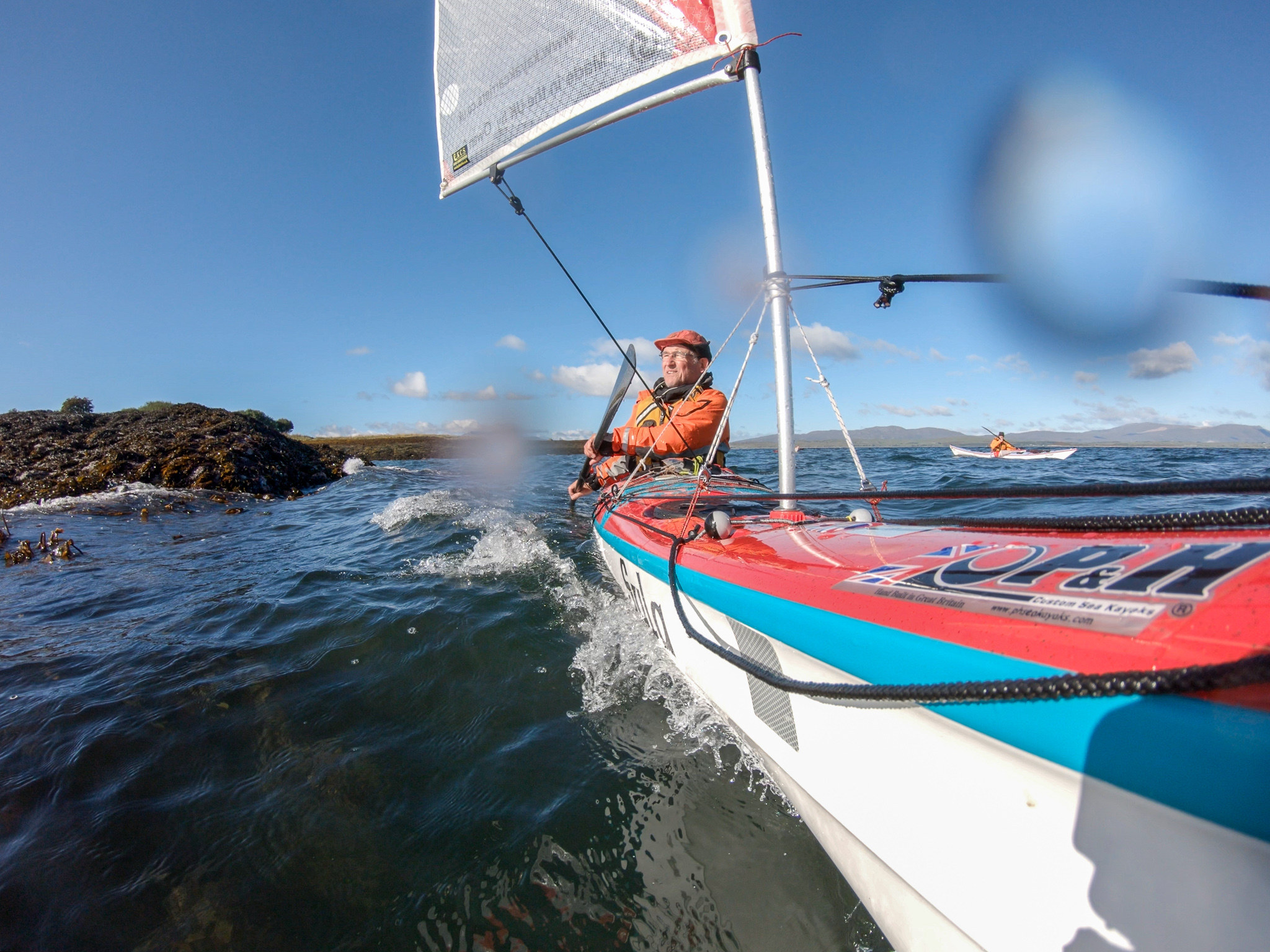
Two very nice touches relevant to paddle sailing, which I suggested to Graham Mackerreth MD of P&H some years ago, now make a first appearance on a composite P&H sea kayak. Firstly there is now a pair of lateral deck line RDFs perpendicular (with respect to the kayak's longitudinal midline) to a mast foot mounting flat moulded on the foredeck. This means you do not need to add additional deck fittings for the mast side stays. 

Secondly, on the starboard side of the deck, just below the front of the cockpit rim, there is a little hook. This allows a rearward extension of the forward deck elastics to be pulled over the folded mast sail and to be secured on the hook. As the whole deck elastic is continuous, this allows you to pull enough elastic through to secure, but not crush, the sail. It then retracts out of the way when the sail is up…neat! Finally, like all recent P&H composite sea kayaks, even this lightweight kevlar carbon version has a foredeck that will withstand the pressure of a mast foot without further reinforcement by the user being required.


Still on the theme of paddle sailing, note the amount of 3D moulding round the mast foot (red plate with two bolts). This all helps to stiffen the foredeck to withstand the pressure of the mast but without adding too much weight from extra layers of laminate. Note the curved depression that is forward of the spare paddle recesses. Unfortunately this particular kayak had a compass mounting that was about 2mm too shallow for the Silva 70p deck compass. P&H will supply a custom cut gasket that will allow you to fit your own.

Test conditions,  locations, comparison kayaks and paddlers.

The test period was October 2020 until September 2022. This included restricted access to the sea during second Covid lockdown. I used the Volan 160 fully loaded on camping trips totalling 13 days. For comparison I switched to the Cetus MV on one of these trips for a further 2 days. The rest of the time health problems limited me to day paddles with a maximum of 12 km though most were only 6 km. In total, I paddled 518km and others paddled  it 133km.

The Volan 160 was paddled in exposed tidal waters of the outer Solway Firth,  open and sheltered waters in the Firth of Clyde and its sea lochs, open sheltered and tidal waters in the Firth of Lorn, tidal waters between the Isle of Skye and the mainland, fjord like Loch Hourn, the Sound of Arisaig and Wester Ross coast in NW Scotland. In my main Solway test area, I have installed an anemometer on an off shore reef and have a spare sports watch (with GPS and accelerometers) with an app attached to a handle on top of a buoy to measure swell/wave height. Winds varied from F0 up to F7 (offshore) and swell up to 1.5m with one 2m day.

It was paddled alongside P&H kayaks: Delphin 155, Aries 155, Hammer, Virgo MV, Scorpio Mk1, Scorpio Mk2 CLX MV and HV, Quest LV, Cetus (original and MV), Cetus LV,  Northshore Kayaks: Ocean 17.6, Voyager 17.0, Voyager 16.10,  Atlantic Evolution/Nomad 17, Rockpool Kayaks: Alaw Bach, Valley Kayaks: Nordkapp LV and Anas Acuta. In order not to allow the Volan's lightweight carbon kevlar construction to affect the comparisons unfairly, the Evolution Kayaks Nomad 17 was included as it is also of full kevlar/carbon construction. It is also marketed as a versatile all rounder but is a more traditional British style shape.

The main tester was 172cm tall and 73kg. The Volan was also paddled by a range of people from 164cm to 188cm tall and 62kg to 90kg. Paddler experience ranged from complete beginner to 5*. It was padded with GP, Euro and wing paddles.

Ergonomics and fit.

Of all the boats mentioned in this test I, and several others, found the Volan 160 and the Nomad 17 to be the most comfortable to sit in for extended  periods of time. There is a common reason, they have bigger cockpits, with more room for thighs, knees and feet than for example the Cetus MV and particularly, the Nordkapp LV and Anas Acuta. Being an all round kayak, the Volan 160 does not have the aggressive thigh grips that are fitted to the Aries 155. Some of the shorter paddlers felt their legs were splaying wider than in their Cetus MVs. The Volan 160 cockpit coaming length, breadth and height dimensions are similar to those of the Cetus MV but the distance across the cockpit, where my knees make contact with the seams, is 3cm larger. However, due to the 2cm thick skeg slider being moved from just above the seam to the fore deck, the Volan has 5 cm more width for your knees than the Cetus MV. If you like the width of the Cetus MV cockpit you could always stick 2.5cm thick mini-cell foam pads to each seam where your knees contact.

A couple of paddlers who have Aries 155s missed the aggressive thigh grips as I have only stuck 3mm mini-cell foam sheet under the deck. It would be easy enough to stick some thicker strips along the inner side of the thigh grip area if you wanted a more positive location. I have not felt the need and it is interesting that the Nomad 17, which was also highly rated for comfort in this test, does not have aggressive thigh grips either. Lastly, the relationship between the Volan 160 seat/deck and cockpit opening is really good. I can get both legs out on the water prior to landing which I can’t in the Cetus MV.

First impressions.

I like boats with chines and the Volan MV is a very modern incarnation of a chined kayak. I like chines because of the early planing when catching a wave. I like the feel of chines when edging. Also, chined boats let you carve a turn (when planing) by leaning the kayak into the turn rather than leaning it out of the turn as most round hulled boats require. Some people like chines from the historical and aesthetic points of view.  The kayak that Ken Taylor brought to Scotland from West Greenland in 1960 was chined and this kayak went on to influence the British style sea kayaks. Indeed the Anas Acuta has its roots in that kayak. I also like chines in sailing dinghies. I much prefer the hard chined RS Aero, which I currently sail to the round hulled Laser, which I sailed in the '70s and '80s. 

Before I had seen it, I had wondered if the Volan 160 might be a composite version of the Virgo MV but as soon as I saw its size and shape, I realised it was not. The overall volume of the Volan 160 is 28l more than the Cetus MV and I think most of that is in the cockpit. When I sat in the Volan 160 cockpit, it felt so roomy compared with my Cetus MV that I wondered whether I would have been better waiting for the smaller Volan 158 to partner my Cetus MV (which fits like a glove or my Valley Nordkapp LV, which fits like a very tight sock). My first few outings were unloaded and in calm or moderate conditions. The Volan 160 cockpit’s spacious comfort, offering enough contact for control, was only matched by the equally roomy Nomad 17 cockpit (which also uses a P&H seat!). 

My first long trip in the Volan 160 was a very windy camping trip and I did not get that instant feeling of “This is the kayak for me” that I got with the Cetus MV on its first outing. I was having to adjust the Volan’s skeg more than my friend in a Cetus MV and I found I had to concentrate to keep it on course. I had loaded the Volan 160 with all my gear in the same place as I would have put it in the Cetus MV. First, this confirmed that they both had similar volume in each of the hatches and that the Volan 160 would not therefore be a particularly good smaller partner to the Cetus MV. However, over the four days, I gradually moved heavier items back and moved lighter items forward. What a difference this made to the way the Volan handled in the wind. At the end of the four days I knew I had found my new "do it all" all round camping boat and thoughts of waiting for a smaller Volan vanished!

Day trips

I was amazed by the Volan 160’s response to edging and its stability on edge,  this stability is quite unlike that of the Nordkapp LV, for example. For a full size expedition boat, the Cetus MV is known to turn tightly on edge but the Volan 160 turns well inside it.

Several times I have followed a Hammer rock hopping through tight channels and only left the paddler to it when the channels had shallow rocks, which he did not mind scraping over. With regard to cruising speed on flat water, there really is nothing in it between the Volan 160 and the Cetus MV not to mention the other British style kayaks it was paddled alongside.

Even when pushing for maximum speed against the tide (when we had missed a tidal window in the Loch Hourn narrows), the Cetus MV was not noticeably faster. 

Where I have really fallen for the Volan 160 is downwind on an open crossings, it is easier to catch more waves than the Cetus MV or Atlantic/Nomad 17. Going upwind, the Volan 160 is much drier than the Quest LV, Cetus MV, Anas Acuta and Nordkapp LV. You will find you need to adjust the skeg less than in an Aries but more than in a Cetus. As I take a lot of photos, I frequently stop paddling. Like the Cetus MV, the Volan 160 is very happy to lie to the wind at the same angle as when you were paddling. This is in contrast to the Aries, which will start to lee cock as soon as you stop paddling. (To reassure potential Aries buyers, the Aries is very neutral in the wind when you are moving and have used the appropriate amount of skeg.)

Multi-day trips

Volan 160 and Cetus MV.

The Cetus MV, Quest LV, Nordkapp LV, Atlantic Evolution/Nomad 17 and Volan 160 can all carry exactly the same volume of my gear but the Volan 160 day hatch is a bit deeper and the bow and stern end spaces are less tapered and so are more usable and easy to load than on the longer kayaks. When loaded, both the Volan 160 and the Nomad 17 are noticeably drier than the other kayaks when going upwind into a breezy chop.

Cruising speed is obviously important on multi-day trips. Although the Volan 160 is shorter than the other kayaks above, it also has shorter overhangs and so the waterline length is not that much different. As it is waterline length that largely dictates maximum displacement (non planing) speed, there is not really much difference in cruising speed between the Volan 160 and the longer traditional British style kayaks. Also many people are not fit enough or have good enough technique to drive a kayak to its theoretical maximum speed. As you approach the hull's maximum speed, the resistance to forward paddling increases exponentially. Other factors also play a part such as the wetted area when loaded and unloaded. The more wetted area the greater resistance to forward paddling. In rough water a stable boat will be easier to keep to speed than an apparently fast, long narrow boat, if paddle strokes are wasted bracing. Putting the theory aside,  in practical terms we noticed no difference in cruising speed or effort between the Volan 160 and the longer kayaks it was compared with. The only difference was that good paddlers could catch more waves going downwind in the Volan 160 and pull ahead of the longer boats.

GPS track of an 11km tow by the Volan 160 from the Isle of Bute to the mainland.

To prove the point about the Volan 160's effective cruising speed, I managed to tow a medically incapacitated paddler in a Cetus MV with the Volan 160 for 11km (across two shipping lanes in the Firth of Clyde) at an average speed of 6km per hour and without stopping. Both boats were fully loaded on a camping trip. 

If speed was my prime requirement in a sea kayak, because I was on a record breaking mission such as a long crossing or circumnavigation, I would choose an FSK such as a Rockpool Taran for a multi-day trip or a surfski for a single day trip.

P&H's sublime RM Valkyrie, a hybrid surfski hull with a kayak deck, would be another great choice if speed was your priority..

Windy conditions.

A friend, who has recently bought a Volan 160 after making quick progress in a Scorpio MV, said he found the Volan 160 was a bit skittish when unloaded in stronger winds. He was the right weight for the boat but had been setting the skeg then forgetting about it, as he had got away with in the Scorpio MV. I have had no problems in wind, if I trim the skeg more frequently than I would in a longer boat. This is particularly so when the wind is coming from about 45 degrees from the bow. However, even in more extreme conditions, the Volan  more than holds its own and is very neutral in strong winds with appropriate use of the skeg. 

On a very windy offshore day, an unladen Northshore Ocean 17.6 began to lee cock as we were trying to round a headland. The owner had lost weight since he bought it and because it was an unloaded HV expedition boat, it was floating higher than ideal. The wind was gusting into F7 but the Volan 160 remained completely controllable and I was able to return and set up an assisted tow. I had no trouble turning the Volan 160's bow into the wind, even when towing, to keep the Ocean 17.6’s bow to the wind while we rounded the headland. 

Photo Ian Johnston
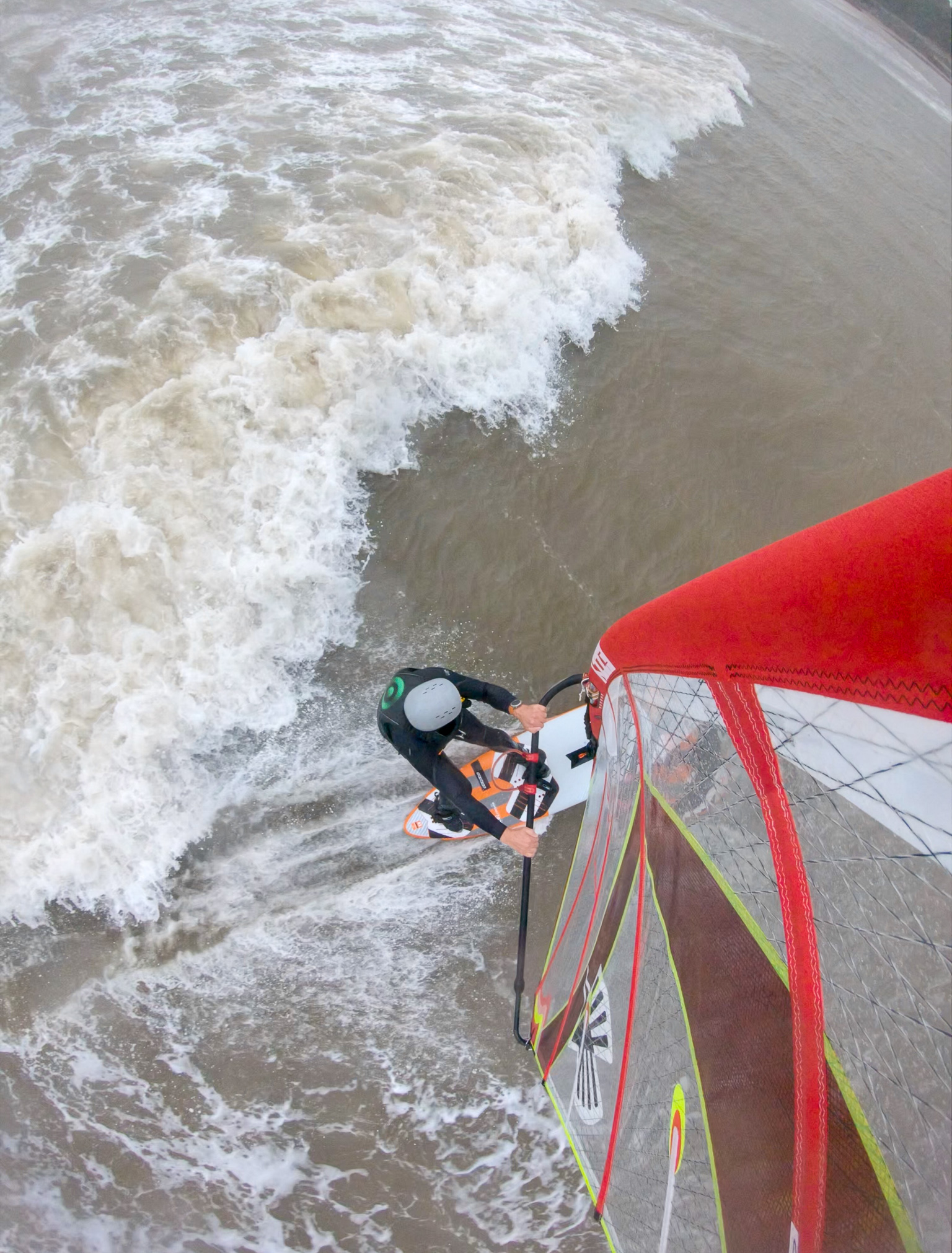
I am a sucker for deck cargo... big camera case and sail folded on the fore deck (if it is not up!) and often a trolley bag on the rear, so I no doubt experience windage problems more than most. I also like collecting abandoned fishing buoys from beaches and rocks. One of these on your rear deck is a great way to test how a boat handles in a breeze. I carried a 70cm diameter buoy for 32km both upwind, across the wind and downwind. Some of the time I used a sail. During this period the anemometer at a local airstrip averaged 11 knots and gusted to 21knots. The Volan with a buoy handled and tracked very nearly as well as the Quest LV and Cetus MV without buoys! Overall, the Volan 160 excels surfing downwind on its chines in a breeze but also handles going upwind very well indeed. 


Swell and surf.
I am lucky enough to live right on a beach (on the Solway Firth) that is exposed to both long period swell and short period surf. In rough water the Volan feels very secure. It has such remarkable secondary stability that I found it seldom necessary to engage the thigh grips.

(Maybe my experience in surfskis has contributed to this, not a thigh grip in sight...despite the narrow width!) 

In more confused seas, The Volan 160 matches the untroubled feel of the longer boats with low volume ends such as Cetus MV, Nordkapp LV,  Atlantic Evolution/Nomad 17 or the Anas Acuta. However, the Volan 160 is faster than these boats once it catches a wave downwind. In short ,steep waves it is easier to alter course to hold a line on the wave face when you are being pushed into a broach than the above kayaks (and also the Quest LV and Cetus MV). Despite being shorter, the Volan 160 is much less likely to start to broach than the original Cetus in particular. 

In my Cetus MV and Nomad 17, if I am catching bigger swell, I find I need to run pretty straight with the bow about 90 degrees to the swell line, while holding a stern rudder stroke, otherwise it tends to broach. However, in the Volan 160 I find I can run at about 45 degrees to the swell without broaching. This is great fun because it allows you to travel faster than running straight in front of the swell. I am also lucky to have a reef break at certain states of the tide. I like to catch the swell at its steepest, smooth face just before it starts to break. I then run away from the breaking section with the white water chasing after my stern. In full planing conditions on a wave face I find that a little skeg helps.

Note that the Volan 160's bow rocker and high bow sheerline help prevent the bow burying.

My aim is to balance the direction of the kayak with very sensitive edging. I use a stern rudder stroke as little as possible as this acts as a brake.  Some say you should never use skeg when catching swell or surf.  Well, I have been catching and riding waves on a variety of windsurfers since 1977 and all of them have had skegs, some 3 or 4!! My full carbon Think Zen surfski even has a rudder! The above technique only works for me in kayaks with hard chines. I can’t do it on my otherwise excellent Nomad 17. It requires I use stern rudder and run straight on most steep waves. However, when you broach a round bottom kayak like the Nomad 17,  it is more forgiving.

In a chined boat, like the Volan 160, you need to be sure to get the chine that is farthest from the wave face out of the water, otherwise it is another swim! Next to the Aries 155, the carbon kevlar Volan 160 is now my favourite British style kayak for catching swell and waves. 

However, let’s be realistic. If you want to ride and shred waves, stand up and get yourself a surfboard or a windsurfer. Compared with a small board, even a carbon sea kayak is an unwieldy, heavy barge. If you really want to sit down and catch waves get a surfski, preferably carbon, and only paddle downwind!

Aries 155 in  Lightweight Kevlar Carbon 
I was concerned about ordering the Volan 160 in kevlar carbon because one of my previous Aries 155s was kevlar carbon and it slammed, banged and shuddered when paddling out over steep waves and surf. My carbon surfski is even worse and I often fear it will break in half! (I guess this is why surfskiers prefer downwind shuttle runs.)  I need not have worried. The kevlar/carbon Volan 160 has more V in the bow than the Aries and comes down off the back of the wave much more softly and with hardly a shudder.

Going out through breaking waves the bow of the Volan 160 sheds water from its deck better than the other kayaks except for the Aries 155 and Delphin 155. You will still get a wet chest but after being dumped on by an incoming wave, the boat rises predictably and safely. When playing in surf, the shorter kayaks; Volan 160, Aries 155, Hammer and Virgo MV could be spun round between sets much more easily than the longer kayaks. The  Virgo MV with less bow rocker and the Anas Acuta with its fine front end were more likely to bury their bow and broach than the other kayaks. If you do bury the Volan 160's bow, it rises and sheds water almost as well as the specialist Aries and Delphin 155s.

The Hammer was great, secure fun in surf but so heavy compared with the others.  Although the Hammer could catch slow moving surf in the shallow water, it was not able to catch faster moving deep water swells that the Volan 160 could.  

Looking at all round performance in swell and surf, such as might be encountered during a longer trip,  the Volan 160 was my favourite. If your interests lie in just playing in the swell, surf and tide races then yes the Aries 155 / Delphin 155 take it due to their more specialised nature. Would I pair a Volan 160 with an Aries 155?  Well for me, the answer is no. There is too much performance overlap at the wave end of the wave/touring spectrum of my use. Remember though, that if the surf is up and there is enough wind, both my Aries 155 and Volan 160 will remain in the shed and I will be out windsurfing. If there is swell but light wind, I will be on my surfski!

Suitability for beginners.


I am not suggesting a beginner should buy a composite kayak as a first purchase and particularly not a kevlar carbon one. However, three absolute beginners really took to the Volan. It was easy to get in and out of and they felt very stable. They found it much easier to turn than the Cetus MV. It would be a great boat to go on and learn edging in because of its remarkable secondary stability.

Rolling, assisted rescues and coaching.

The Volan 160 has a very predictable roll. It does not roll as fast as a Valley Nordkapp LV, which tends to window blind and roll over again if you are not quick. Due to the rocker, the bow and stern continue to provide some support once you pass the limit of secondary stability in an accidental capsize. This delays overturning and  a good paddler may be able to use a high brace to recover before complete inversion. Those smaller paddlers or those who depend on a vigorous hip snap to come up will probably want to stick some more pronounced thigh grips under the deck. I have not found the need. The back deck is about the same height as the Northshore Atlantic Evolution/Nomad 17 and Valley Nordkapp LV but is a bit higher than the Cetus MV. However, it was still low enough to make back deck rolls easy. 

Assisted re-entries were easy using the heel hook and the spacious cockpit  meant twisting your bum round into the seat was easy. The elastic supported Connect seat back resisted folding under you during re-entry pretty well. The Volan 160 proved easy to empty during an assisted T rescue.  I have found the flooded Aries 155 more difficult to lift due to the pronounced upturn of the bow.

The Volan's stability and ability to turn quickly are a real boon when coaching. I am currently teaching my 9 year old grandson to sea kayak and I am very happy to coach his out of boat practice from the Volan 160.  Needless to say, his kayak, a Jersey Junior also has chines!

Paddle sailing.

TheVolan 160 is an absolute blast when paddle sailing! 

Flat Earth Footloose sail.
I used the Volan 160 with Flat Earth Tradewind and Footloose sails and KCS Pro sail. While the Tradewind is forgiving in gusts and is ideally suited to newcomers to paddle sailing, I preferred the more responsive feel of the Footloose and Pro sails.  They also deliver more power in a gust, which is very helpful when the boat is laden on a camping trip.

Upwind, with similar Flat Earth Tradewind sails, the Volan 160 appears to point as high to the wind as the longer boats. However, like the shorter Aries 155, it slips more to leeward and after a kilometre of sailing as close to the wind as possible it was about 120m downwind of the longer kayaks. I also found I was having to trim the skeg in the Volan 160 and Aries 155 more often than in the longer kayaks.

KCS Pro sail.
Paddle sailing in decent downwind conditions, the Volan 160 truly excels, it will help you catch more waves than most other British style kayaks apart from the Delphin/Aries.  Among the longer kayaks, the Quest LV was a favourite and gave a great paddle sailing downwind as it picked up waves easily and required little effort to keep it on line.


When surfing downwind on the faces of swell, the pressure of the forward mounted sail helps prevent broaching and you can go for  long distances without requiring steering strokes. Do remember with these small Australian type sails that you need to keep forward paddling. Bigger, American style sails, are much more powerful and you do not need to paddle. However, I would not take them out in the rough water, high wind conditions conditions that the smaller sails are designed for.  Also just sitting there in a Scottish winter gets cold! Paddle sailing is the way to go.

In the Volan 160, a combination of stern rocker and its chines, which extend towards the bow, helps catch the wave and stay planing on its face. Similar to the Aries 155 and Delphin 155,  when planing at speed, the response to edging reverses and the boat turns towards the depressed edge. These types of boats are more responsive to edging when paddle sailing downwind than the longer, round bottom hulls of the Cetus MV, Nordkapp LV, Ocean 17.6, Voyager  and Atlantic/Nomad 17.0 which require frequent stern rudder strokes. Note that I would not recommend edging to hold a long course while paddle sailing (that is what your skeg is for!) but edging is ideal for short term adjustments, especially on a wave. Overall, I have had more fun paddle sailing the Volan 160, laden and unladen, than in any other kayak.

Wear and tear.
The Volan 160 has survived over 650km paddling by myself and others and still looks new. There have been only three minor issues:

The stainless steel cable for the skeg adjuster got a slight kink when a beginner tried to put the skeg down while the stern was still on the beach. It has not affected function at all.

In calm conditions there are small but persistent leaks into the rear compartment and rear day hatch. It is not much more than a few cc over the course of a day. However, in rough conditions, especially on a camping trip with a load, the boat takes on several litres over a day. I have not yet discovered its source. In my experience, it is usually the gland where the cable enters the skeg box but I have upturned the kayak and filled the skeg box with water and it is bone dry. I have also removed the deck line RDF fittings but all their inserts are water and air tight.

I have never previously had a P&H kayak with so much stretch in the deck lines. Again it is not a big deal as I just pull it tight and tie a new knot in the end.

Conclusions.

I have paddled my Cetus MV and the Aries 155 since they first came out and I have enjoyed every moment of their complimentary characters. However, the Volan 160 is such a superb all rounder that, since I got it, I have only paddled the others for comparative purposes. For me, with a mix of 90% day paddles and 10% camping trips, it is easily the most versatile sea kayak I have paddled over the last 21 years. 

I have decided there is no point in having a Cetus MV and a Volan 160. The Volan 160 does everything for me the Cetus MV does and more. There is less performance overlap with the Aries 155 but even so, there is much less need for the Aries 155 when paired with the Volan than if paired with a Cetus. 

If you are interested in paddle sailing, the Volan 160 is probably the best synthesis of chines, rocker and length for paddle sailing currently available. I have enjoyed paddle sailing it more than any other kayak I have tried.

So my future will be with one kayak, the Volan 160, which, for my weight of 73kg, is a true all rounder. It swallows all the gear my Cetus MV took plus it is a lot more playful. P&H have undersold the Volan, it is way more than a playful weekend camper.

With P&H kayaks we really are spoiled for choice.


Specifications.

Volan 160 in Lightweight Kevlar/Carbon construction
Length: 489cm
Width: 58cm
Volume: 360l
Weight as tested: 20.2kg

Full specifications and details of other constructions and prices at phseakayaks.com

Disclaimer
Please do not buy a kayak as a result of reading a review! At the very least, you must sit in one and make sure you fit in it. Ideally you should paddle any kayak before purchase and preferably paddle several alternatives,  in a variety of conditions, before deciding what is best for you. I know many people live a very long way from demo centres and are therefore more reliant on reviews. I have therefore included measurements of several people who have successfully paddled the Volan 160.

Conflict of Interest and acknowledgements.
I have lost count of the number of P&H sea kayaks I have bought or been loaned over the last 21 years. I am grateful that I have had a long-standing, unpaid relationship with Pyranha/P&H in which I have access to new products/prototypes in exchange for feedback. Some of the features on the Volan 160 are a direct result of my feedback on previous models or during general discussion with Graham Mackereth and Mathew Wilkinson. I own several personal kayaks from Dagger, Evolution Kayaks, Pyranha, P&H, Rockpool, Think and Valley so I am not dependent on P&H to go paddling. I am grateful to Mathew Wilkinson of P&H and Mark Mitchell of Sea Kayak Oban www.seakayakoban.com for their help in delivering the Volan 160. I am thankful to all my sea kayaking friends who have patiently put up with my "try this, what do you think of that?, hang on I need a photo!"


Wednesday, May 19, 2021

KCS Pro Kayak Sail System test and review.


Photo by Donald Wilcox

Since lock down lifted I have been testing various prototypes of the KCS KY-PRO Sail System. The system is available in three versions:

1. Sail only to fit other rigs such as Flat Earth Kayak Sails.

2. Sail, carbon fibre mast and boom, universal joint and deck fittings which require the deck to be drilled.

3. Sail, carbon fibre mast and boom, custom front hatch with mast foot and stay fittings, cleats that can be attached to the RDF fittings near the cockpit by using longer bolts. This option is for those that do not want to drill their deck or want to attach a sail to a borrowed, hired or demo boat.

Background to the test
I have been a long time user of a variety of kayak sailing systems. I have owned and used Pacific Action V sail, the KayakSailor rig and various Flat Earth kayak sails. I have also borrowed and used the Baloghsailsystems Batwing and Falcon Sails rig. They all are excellent in their own way and each has their strengths and weaknesses.


For the type of paddle sailing I do in the west of Scotland I prefer the Flat Earth sails in 0.8sqm size. They suit the open exposed waters and the sometimes gusty winds off the mountains. They are not as large and powerful as the KayakSailor, Baloghsailsystems and Falcon Kayak Sails rigs so you always need to paddle while you sail but in chilly Scotland this keeps you warm, especially in winter. The Flat Earth Kayak Sails in addition to being smaller also have a looser leach and this gives them a much wider wind range than the other designs.

I was therefore delighted when Ronnie Weir of KCS produced his prototype sails to find they are a similar size to Flat Earth designs and, though of different design and materials, have a similar range of intended use, i.e. for most users they are intended to be used on flat or rough open water from F2 up to F4/5. The KCS sails are made in Scotland by Owen Sails, a long established yacht sail maker based in Oban. Owen Sails started out in the mid 1980s making windsurfing sails and I still have one of their 6sqm, six batten slalom sails. So they know about smaller sails too.

This test was carried out on the Solway Firth, Firth of Clyde, Firth of Lorn, Sound of Sleat, Loch Hourn, Kyle Rhea, Inner Sound and Loch Carron on the west coast of Scotland. Conditions varied from F2 to F5.

Sail construction.

This sail is constructed from heavier cloth than the equivalent Flat Earth sails. The 0.75sqm KCS is also a good bit smaller than the FE 0.8sqm. The upper/luff panel is made of Dacron which is flexible enough to give warning when the sail is about to backwind if you point too high into the wind. The leech/lower panel is made of a heavier trilaminate cloth than that used in Flat Earth. The sail is loose footed unlike the Flat Earth TradeWind sail, where the boom is sewn into the sail like a batten. The KCS also has a longer boom and sets fuller with a deeper draught than the equivalent size FE. Like the FE TradeWind sail, the KCS sail is a spritsail with a single diagonal batten, which rises from the tack (the corner of the sail where the boom meets the mast). The KCS sail has a stiffer batten than the FE and the batten is sewn into the pocket with more tension than in the FE. This means it puts more 3D shape into the sail making it more powerful for its size. However, in very light winds, the batten might flip its curve to the wrong side of the sail. The stiffer batten also holds onto the sail's power longer in a gust before twisting off and releasing wind pressure from the roach of the sail (the part near the upper end of the batten).


The 0.75sqm KCS KY-PRO sail overlaid on a 0.8sqm Flat Earth TradeWind sail. Note similar head and upper roach but reduced area, shorter luff and longer foot of the KCS. 

1. The KCS KY-PRO 0.75sqm sail tested  Flat Earth aluminium mast and boom with the mast foot bolted to the foredeck forward of the compass recess.

The KCS sail was paddled alongside a Flat Earth TradeWind 1.0sqm and...

...a Flat Earth TradeWind 0.8sqm in a variety of wind strengths from F2 to F5.  The KCS sail performed excellently overall but especially in the higher winds. In lighter winds both sizes of the FE TradeWind sail have the edge on a reach/broad reach.


However, at bottom of  F4 the KCS produces more power and in  mid F4 and above feels significantly more powerful than the 0.8sqm TradeWind. In gusty F4 conditions the TradeWind remains very controllable due to the leech twisting off more easily but in doing so it looses power. The tighter leeched KCS is more powerful but, as it is significantly smaller, remains a lot of fun in these conditions. It does require a bit more experience to handle than the TradeWind in these upper end conditions. In this respect, it is similar to the double battened, loose footed, Flat Earth Footloose sail. Overall, I think the KCS sail is a good compromise between size, leech tension and fullness of cut/power for use on exposed open water. Upwind when paddling in F3/F4 there is little performance difference between the KCS and the Tradewind except, when well worn, the loose Tradewind leech motors (flaps) in the breeze.  The KCS sail is not showing signs of this after two years of use.

2. The KCS KY-PRO 0.75sqm sail tested on the KCS carbon fibre mast and boom with the mast foot bolted to the foredeck, forward of the compass recess.
The KCS carbon fibre mast is one piece but a two piece may be available in the future. 

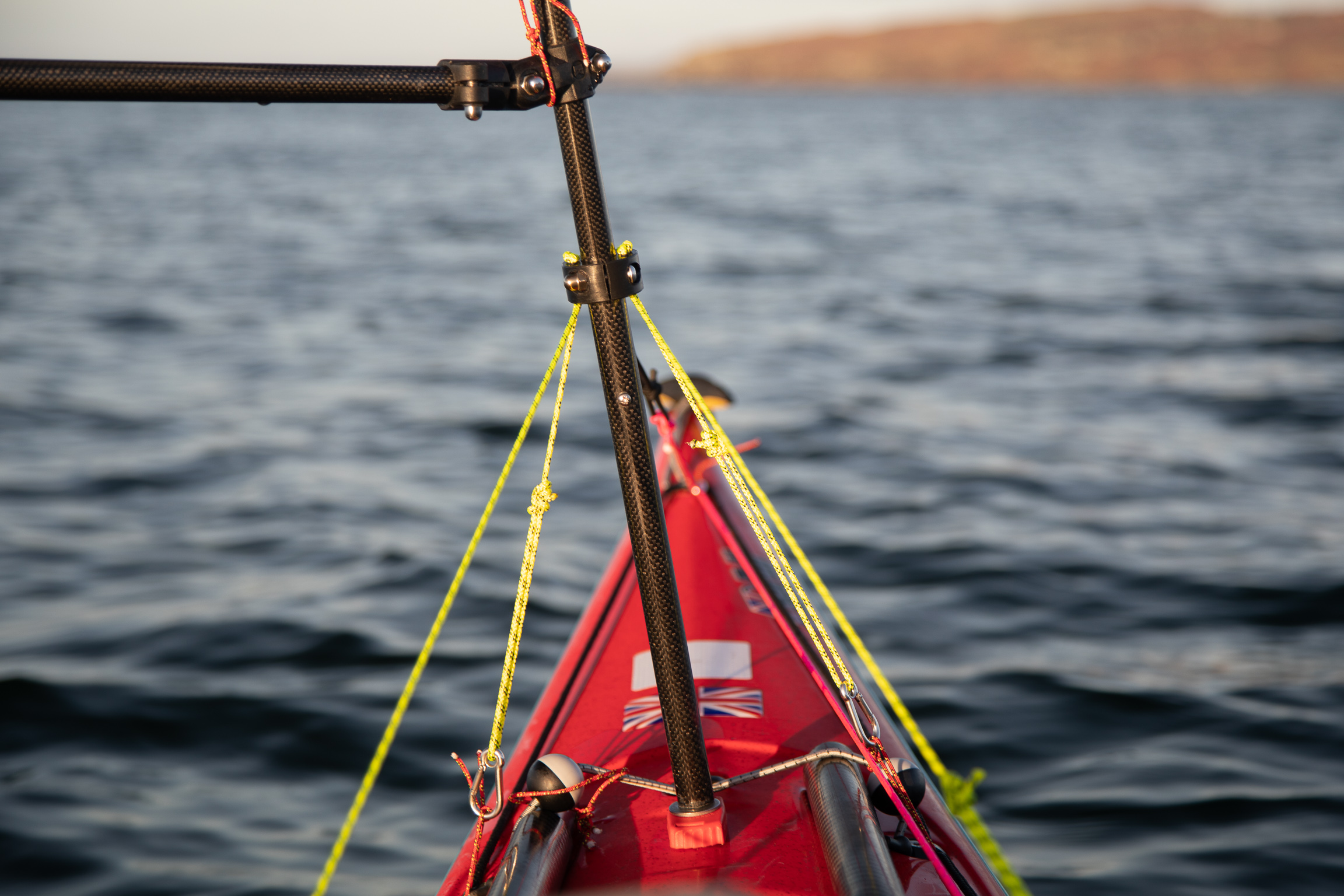
The compression collar round the mast retains the two back stays, two side stays and the uphaul/fore stay. It is simple and avoids the need to drill the mast, which could weaken it. A longer thinner collar at the bottom of the mast slides over the mast base universal joint stub.

The most recent P&H composite kayaks like the Volans have a moulded flat forward of the compass to 
mount the deck plate. They also have deckline RDFs mounted laterally to the deck plate position to give the best support to the past. The side and back stays can be attached to these using a short loop of the supplied 2mm dyneema line.

Older P&H composite kayaks like the Cetus usually do not have a suitable deckline RDF lateral to the deck plate. The fitting kit comes with two SDF fittings that can be bolted through the seam wich is very strong compared with the decks in some kayaks.

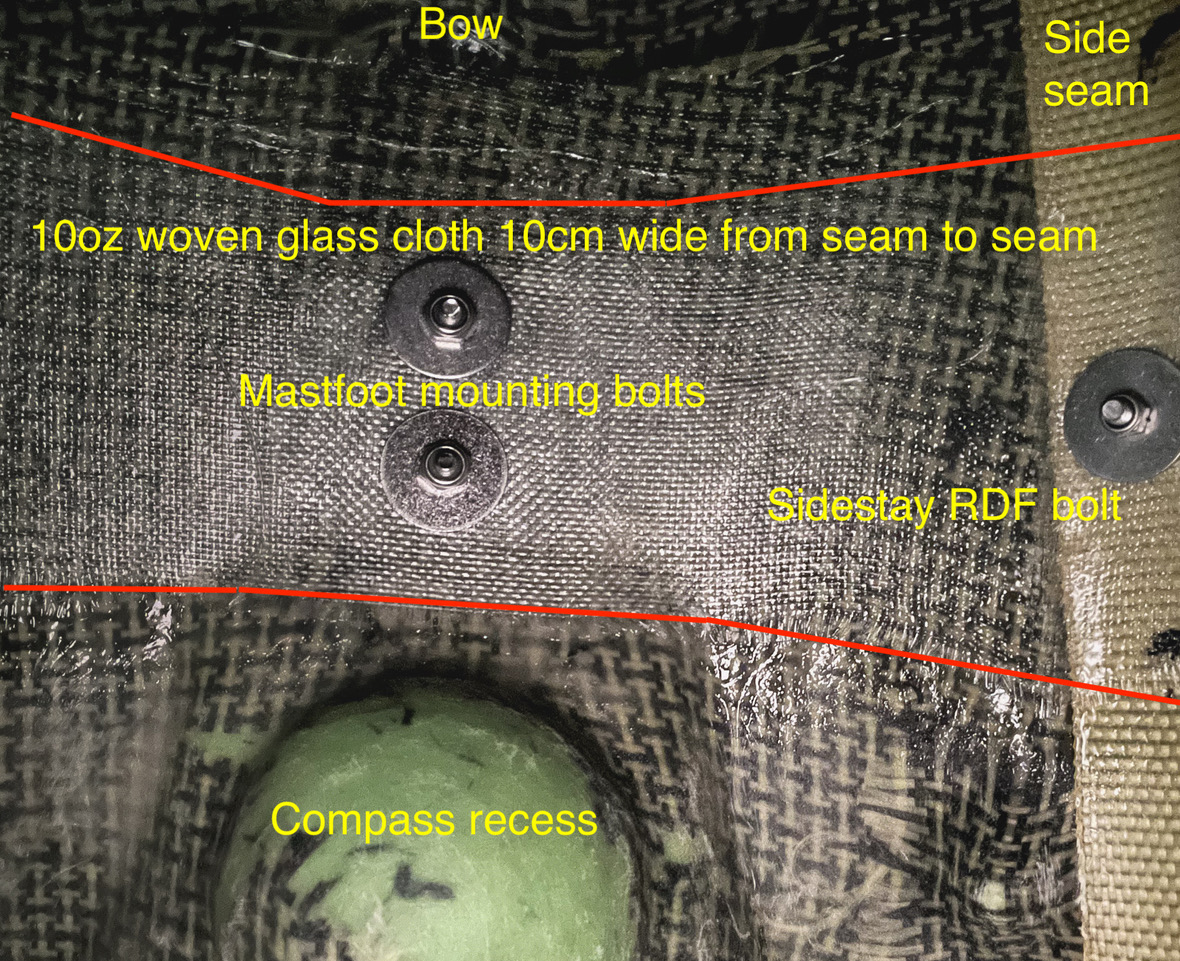
The fore deck of all P&H composite kayaks has been reinforced for a mast foot for about the last 10 years. On other kayaks such as this Evolution Kayaks Nomad (Northshore Atlantic) and my Nordkapp LV I have reinforced the underside of the deck (from seam to seam) with  a 10cm wide arch  of 10oz woven cloth and resin.

KCS mast foot on left Flat Earth mast foot on the right.

The KCS UJ/mast foot is a Seasure Quick Release Tiller Extension Joint. The deck plate fixing hole centres of this and the current black Ronstan fitting used by Flat Earth sails are both 22mm apart. The original Flat Earth red deck plate (photo above) had hole centres 32mm apart. If you already have a red Flat Earth deck plate on your kayak, you can use the FE UJ/mast foot with the KCS mast. However, the KCS mast foot is 18mm in diameter and the Flat Earth mast foot is 16mm in diameter. You can do as I have done and pad out the Flat Earth mast foot with electrical tape or KCS can supply a carbon fibre sleeve to glue over the Flat Earth mast stub.

If you have no previous sail fitting then you will need to drill the kayak deck. P&H RM kayaks come with brass inserts with centres 32mm apart for the red FE deck plate. However, for both current KCS and Flat Earth deck plates you will only be able to use one insert and so will need need to drill one hole.

The boom has a very neat hinged joint at the gooseneck and...

...the sheet is attached to the boom with an elastic loop to help absorb the force of gusts.

...the outhaul is very slim and neat and allows more expert paddle sailors to control the fullness of the sail.

There is no kicking strap on this type of sail and as the shrouds are below the boom, the boom can swivel forward  in front of the mast. This is an important safety feature as it allows you to depower very quickly if you get hit from behind by a sudden overpowering squall. In these conditions it can be very difficult to either pull the sail down towards you against the wind or to turn the bow into the wind to allow the sail to be blown back towards you.

Everything worked well, the sail set nicely on the carbon fibre spars.  These look great, but I could not honestly detect any difference in performance over the aluminium spars in the Flat Earth rig.

The sheet (yellow) comes down from the boom and threads through a Ronstan shock block that is attached to the forward midline deck elastic RDF by 2mm dyneema. 

The sheet then runs back to an open Fineline cleat in front of the cockpit which has been fitted by drilling through the deck. For those paddle sailors who cannot bear to drill holes in a shiny sea kayak see next section. The forestay/uphaul goes from the mast forward to another Ronstan shock block which is attached to the forward deckline RDF at the bow and then back to another fineline cleat on the other side of the cockpit.

3. KCS KY-PRO Sail, carbon fibre mast and boom, tested on custom front hatch with mast foot and stay fittings.

This is a really novel and well engineered solution for people who do not like drilling holes in their kayak. It consists of a circular outer plate just bigger than the hatch rim and an oblong inner plate, which is narrower and longer than the hatch diameter. These are secured together by three bolts with captive thumb screws. The red and white rope forms a handle to pull the two plates together in such a way that the three bolts in the lower plate line up with the three holes in the upper plate... pure genius! There is the potential for a little water to get in through the holes the rope comes through, you could put a little Vaseline on the rope, but I have not noticed any leakage. The mastfoot/UJ and side stays attach to the aluminium spreader bar, which is positioned at the forward end of the hatch to maximise up wind sailing performance. Access to the front hatch is restricted compared with the usual hatch cover but I was surprised how easy it was to fit and remove. Indeed in cold weather it was actually easier than some conventional rubber hatch covers!!!

The cleats for the uphaul and the sheet are also fitted without drilling. they are attached to the deckline RDF fittings nearest the cockpit using longer than standard bolts. To stop the cleats swivelling a short piece of cord secures the front of the cleat to the adjacent RDF.

The mast foot is obviously to the rear of where most kayak sails would be mounted in front of the compass recess (how this affects paddle sailing is discussed below).


The rearward mount does mean that the stowed sail has a greater overlap with the cockpit. This may bother some. It did not bother me at all.

This is the view forward when the sail is stowed. I was very pleased by how unobtrusive it was. On the production version, the aluminium spreader bar will be even lower.

With the sail rigged on the KCS hatch mount it sailed just as well when running off the wind as when it was mounted further forward on the foredeck.

I also noticed no difference in performance on a broad reach.

However, once on a beam reach to a beat, I started to clatter the end of the boom with the paddle. I switched from a high angle to a low angle paddling style and that solved the problem. This is a limitation of having the sail mounted closer to the cockpit.

Another limitation of the more rearward hatch mount is when beating upwind. You can only point at 60 degrees off the wind with a tacking angle of 60 degrees. When the sail is mounted forward, you can point closer to the wind, at 45 degrees off the wind, which gives a tacking angle of 90 degrees. The formula for working out the pointing angle (p) from the tacking angle (t) is p = 90 - (t/2)

Conclusions.

1. The KCS KY-PRO sail is a very well made small but powerful kayak sail which has superb performance, especially as the wind increases.

2. The KCS carbon mast, boom and stays are well made, light and strong, with great fittings.

3. The KCS hatch mount with mast foot and spreader bar for stays is a brilliantly engineered solution for those that do not want to drill holes in their own boat or want to fit a sail to a borrowed boat. Its downwind paddle sailing performance was unaffected but it does limit pointing angle upwind and cause the paddle to hit the boom if you use a high paddle style going upwind or across the wind. 

Potential paddle sailors now have a choice... to drill or not to drill. What a great addition to the choice of paddle sailing equipment available to kayakers. An innovative and flexible paddle sailing system that both performs and is made in Scotland.

Lastly, the way the hatch mount is constructed, I can see no reason why an existing paddle sailing rig, such as a Flat Earth rig, could not be fitted to the hatch mount.